






Watering chili pepper plants correctly is essential for healthy growth and good yields. Both a lack of water and excessive moisture can cause problems. The key is to maintain suitable moisture levels in the growing medium, ensure good drainage and adjust watering according to temperature, plant size and growing conditions.
💧 Quick Summary
🌱 Growing medium: moist, but never permanently waterlogged.
👆 Before watering: check the moisture level of the growing medium.
🪴 Pots: should have good drainage holes.
☀️ Heat: increases the rate at which the growing medium loses water.
⚠️ Avoid: following a fixed watering schedule without first checking the plant and growing medium.
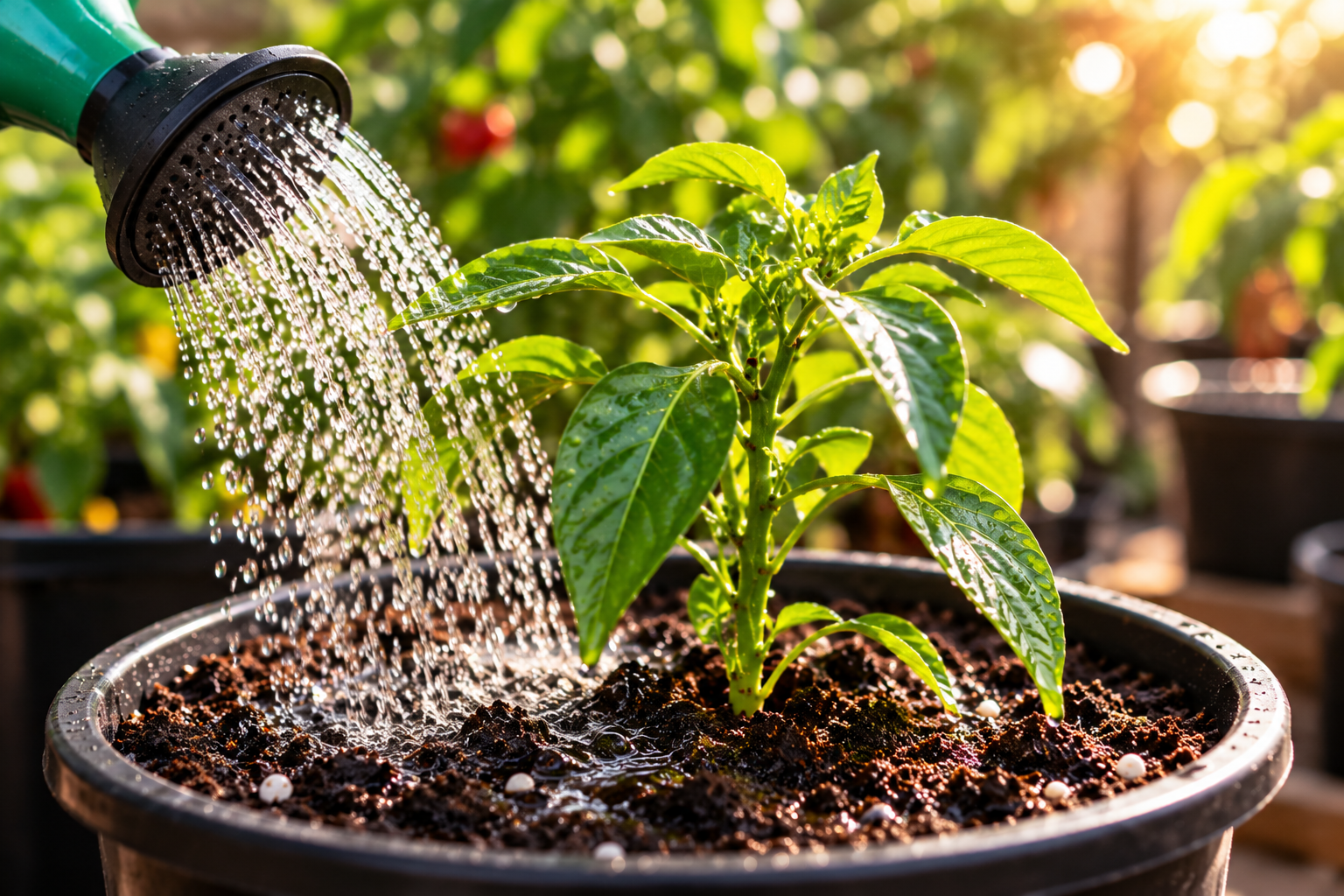
💧 When Should You Water Chili Pepper Plants?
There is no single watering frequency suitable for every plant. A small pot placed in direct sunlight may dry out much faster than a large plant grown in the ground. Therefore, it is better to check the growing medium before watering rather than automatically watering every few days.
Gently insert a finger into the surface of the growing medium. If it still contains plenty of moisture, you can usually wait. If the upper layer is dry and the growing medium is beginning to lose moisture, it may be time to water again.
During warm weather, check your plants more frequently, especially when growing them in containers.
🚿 How to Water Correctly
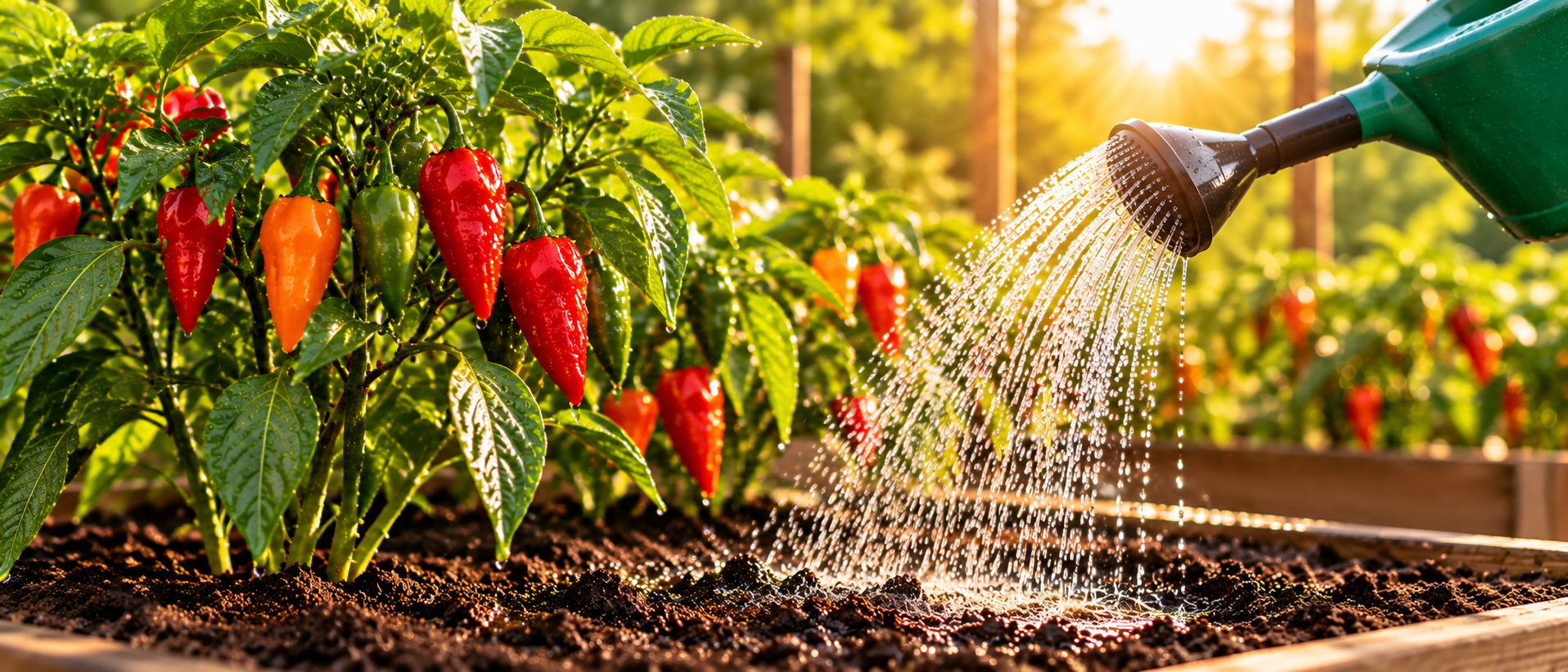
When watering is necessary, provide enough water to moisten the growing medium thoroughly. In a pot with good drainage, excess water should be able to escape through the holes at the bottom.
Avoid repeatedly applying only small amounts of water to the surface. Proper watering should allow moisture to reach the area where the roots are located.
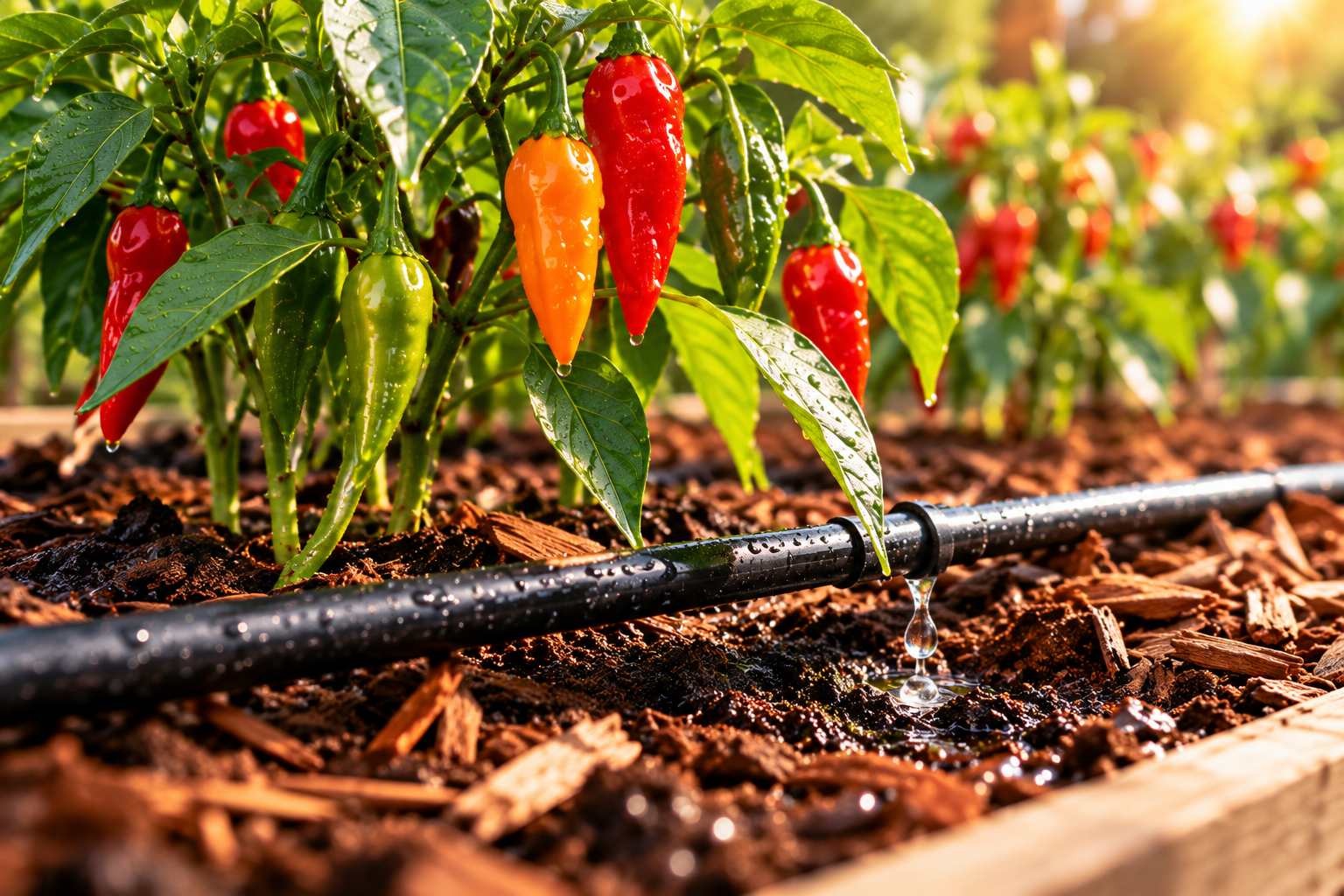
💦 Drip Irrigation for Chili Peppers
Drip irrigation can be very practical when growing several plants, especially in vegetable gardens, raised beds or greenhouses. It allows water to be delivered close to the root zone and makes regular watering easier.
The system should be adjusted to the plants' actual needs. Using drip irrigation does not mean it should run continuously: soil moisture must still be checked.
Mulching around the plants can help reduce evaporation and retain soil moisture for longer.
🌡️ What Determines Watering Frequency?
| Factor | Effect on Watering |
|---|---|
| Temperature | At higher temperatures, the growing medium usually dries out more quickly. |
| Pot size | Small containers may lose moisture more rapidly. |
| Growing medium type | Drainage and water retention capacity affect how often watering is needed. |
| Plant size | A large plant may use more water than a small seedling. |
| Sun and wind | These can accelerate moisture loss. |
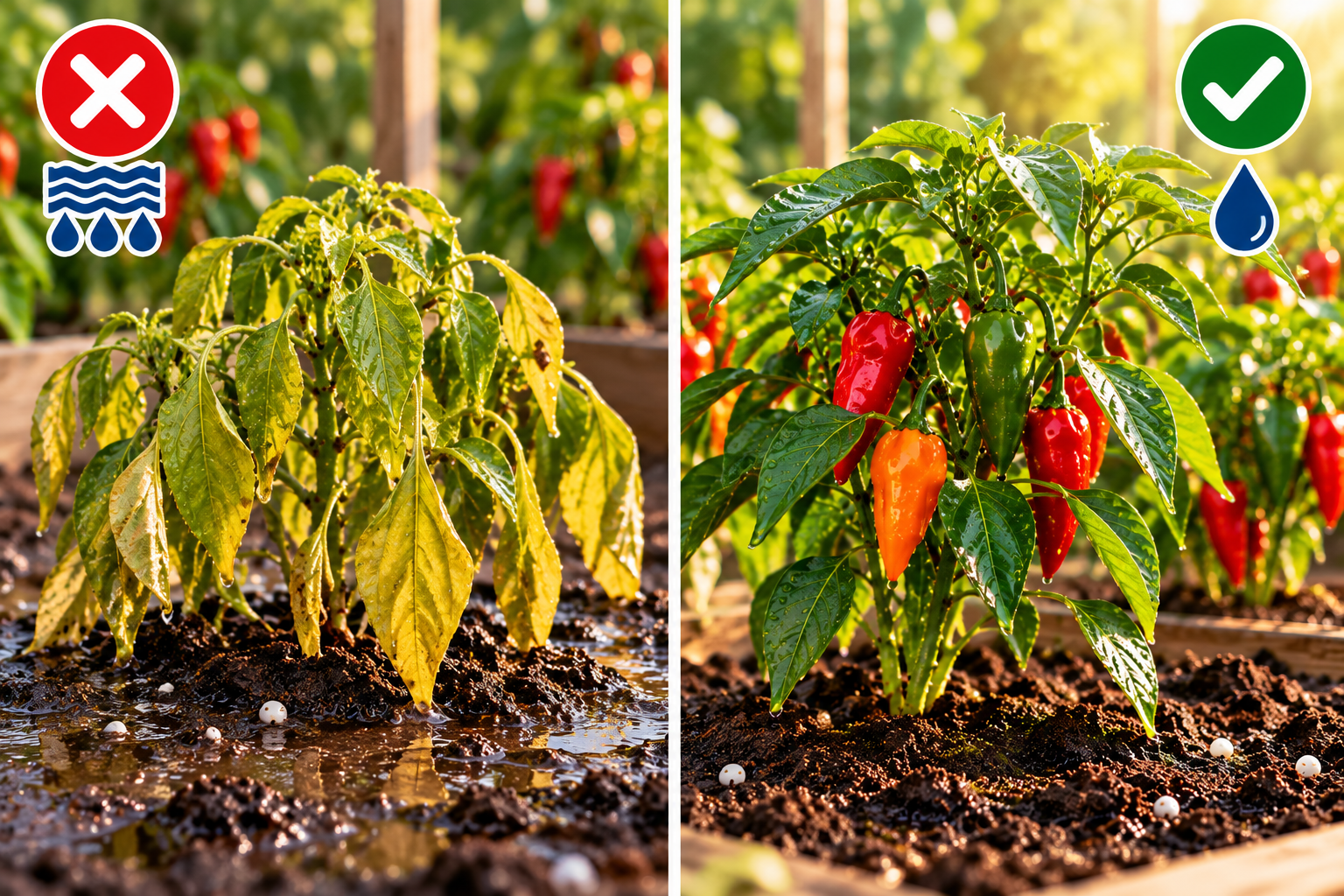
⚠️ Overwatering Is Also a Problem
Too much water can be just as harmful as allowing a plant to dry out excessively. Permanently saturated growing medium contains less air available to the roots and can encourage various problems.
If a plant develops yellowing or drooping leaves, do not automatically assume that it needs more water. First, check the moisture level of the growing medium.
Good drainage is particularly important when chili peppers are grown in pots. Containers should allow excess water to drain away easily.
🌅 What Is the Best Time of Day to Water?
Whenever possible, watering during the early hours of the day is a practical option. The plant has access to water before the hottest hours, and it becomes easier to check how the moisture level changes later.
However, the most important thing is not to leave a seriously dehydrated plant without water simply because you are waiting for a particular time of day. The plant's actual condition should take priority.
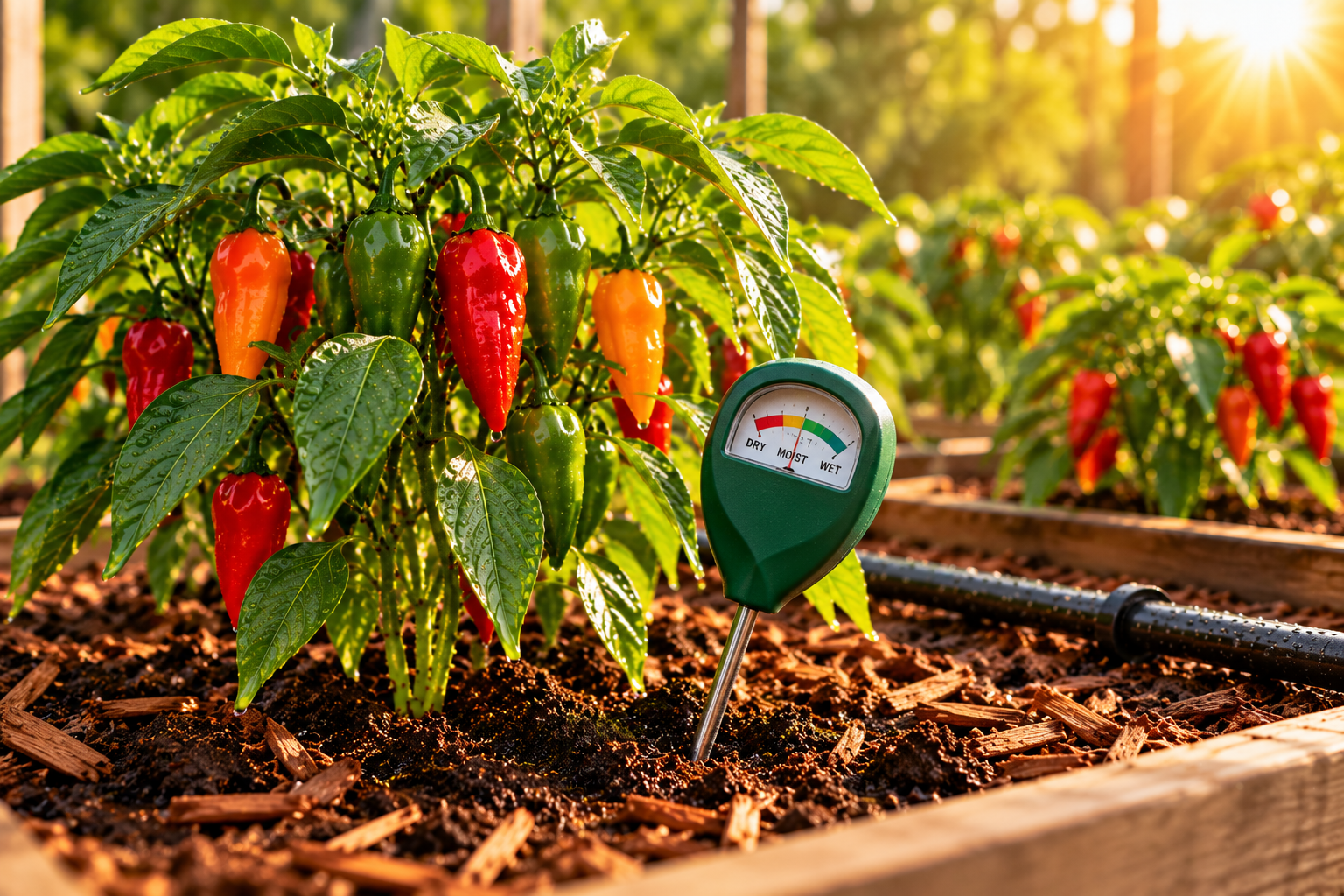
🌱 Check Moisture Before Watering Again
Learning to observe the growing medium is one of the best ways to improve watering. You can check it manually or use a moisture meter as a guide.
Do not rely exclusively on one tool. The weight of the pot, the appearance of the growing medium, ambient temperature and the overall condition of the plant also provide useful information.
With experience, it becomes much easier to recognize when a plant genuinely needs water.
❗ Common Watering Problems
| Problem | Possible Cause |
|---|---|
| Yellowing leaves | Among other causes, excessive moisture or root problems. |
| Wilting plant with dry growing medium | Possible lack of water. |
| Growing medium stays wet for too long | Poor drainage, overwatering or low evaporation. |
| Pot dries out very quickly | Small container, intense heat, wind or growing medium with poor water retention. |
✅ Tips for Watering Chili Peppers Correctly
💧 Check the growing medium before adding more water.
🪴 Use pots with adequate drainage.
🌡️ Monitor plants more closely during very hot weather.
🌱 Avoid keeping the roots constantly waterlogged.
🍂 Mulching can help retain moisture in outdoor crops.
👀 Observe your plants rather than relying solely on a fixed schedule.
🌶️ Proper Watering Helps Grow Stronger Plants
The goal is not to keep the growing medium constantly soaked, but to provide the water plants need while avoiding prolonged periods of saturation. Watering frequency must continually be adjusted according to the weather, container, growing medium and size of each plant.
With a little observation, you will quickly learn how your chili peppers' water requirements change throughout the different growing stages.
🛠️ Need to Improve Your Garden Irrigation?
If you already have your seeds, you may need irrigation systems, hoses, water pumps, irrigation timers or other products to care for your plants. At GLOOBB, you can compare different gardening options.