




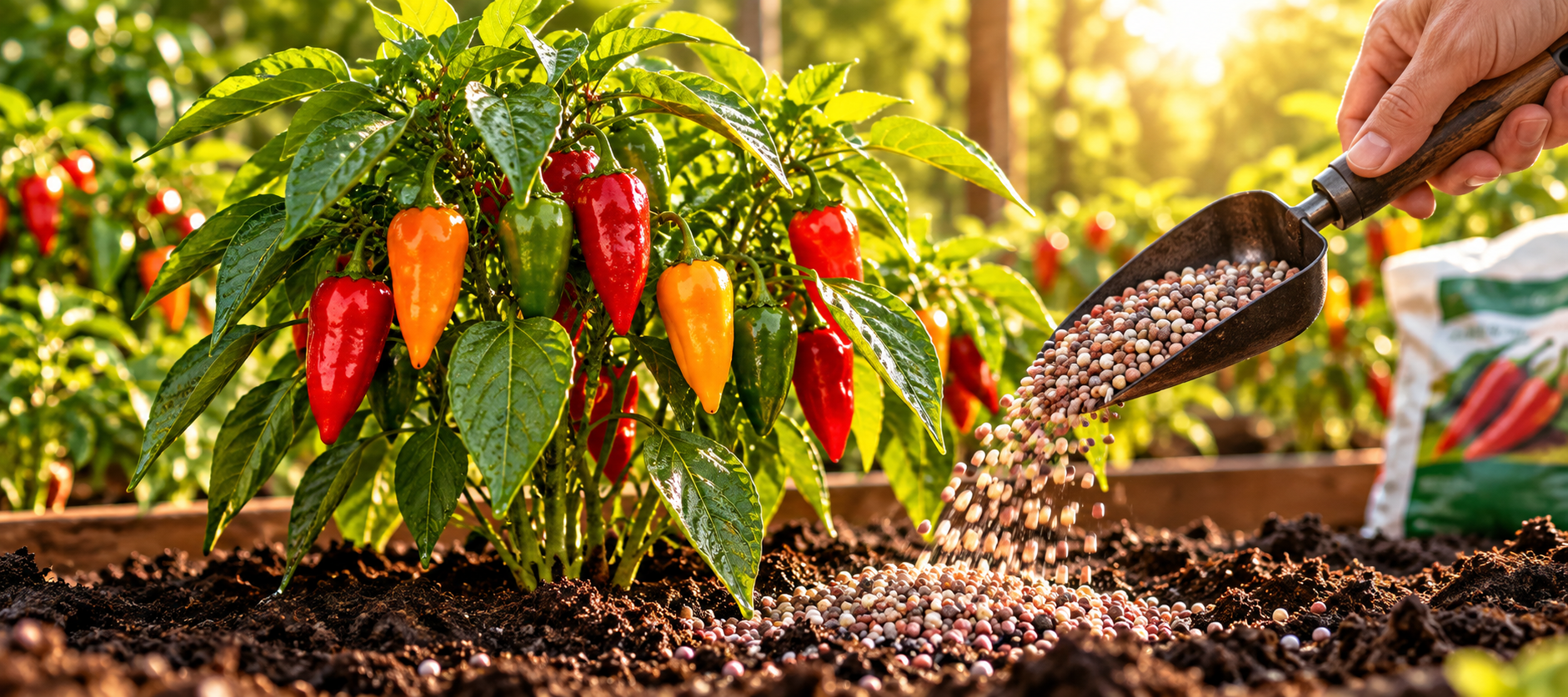
Proper fertilization of chili pepper plants is not simply a matter of adding more fertilizer. Nutritional requirements change as the plant moves from establishment and vegetative growth to flowering, fruit set and fruit production.
Nitrogen (N), phosphorus (P) and potassium (K) are the three macronutrients commonly listed on fertilizer labels. Understanding what the plant needs at each stage helps you choose a suitable formula and avoid both nutrient deficiencies and overfertilization.
Not all plants develop at the same rate. It is more useful to observe whether the plant is establishing itself, growing, flowering or producing fruit than to rely solely on a calendar.
What Do N, P and K Mean?
| Nutrient | Main Function |
|---|---|
| N — Nitrogen | Essential for leaves, stems and vegetative growth. |
| P — Phosphorus | Particularly important during establishment and early root development. |
| K — Potassium | Becomes especially important from flowering onwards and during fruit development. |
Fertilization According to Growth Stage
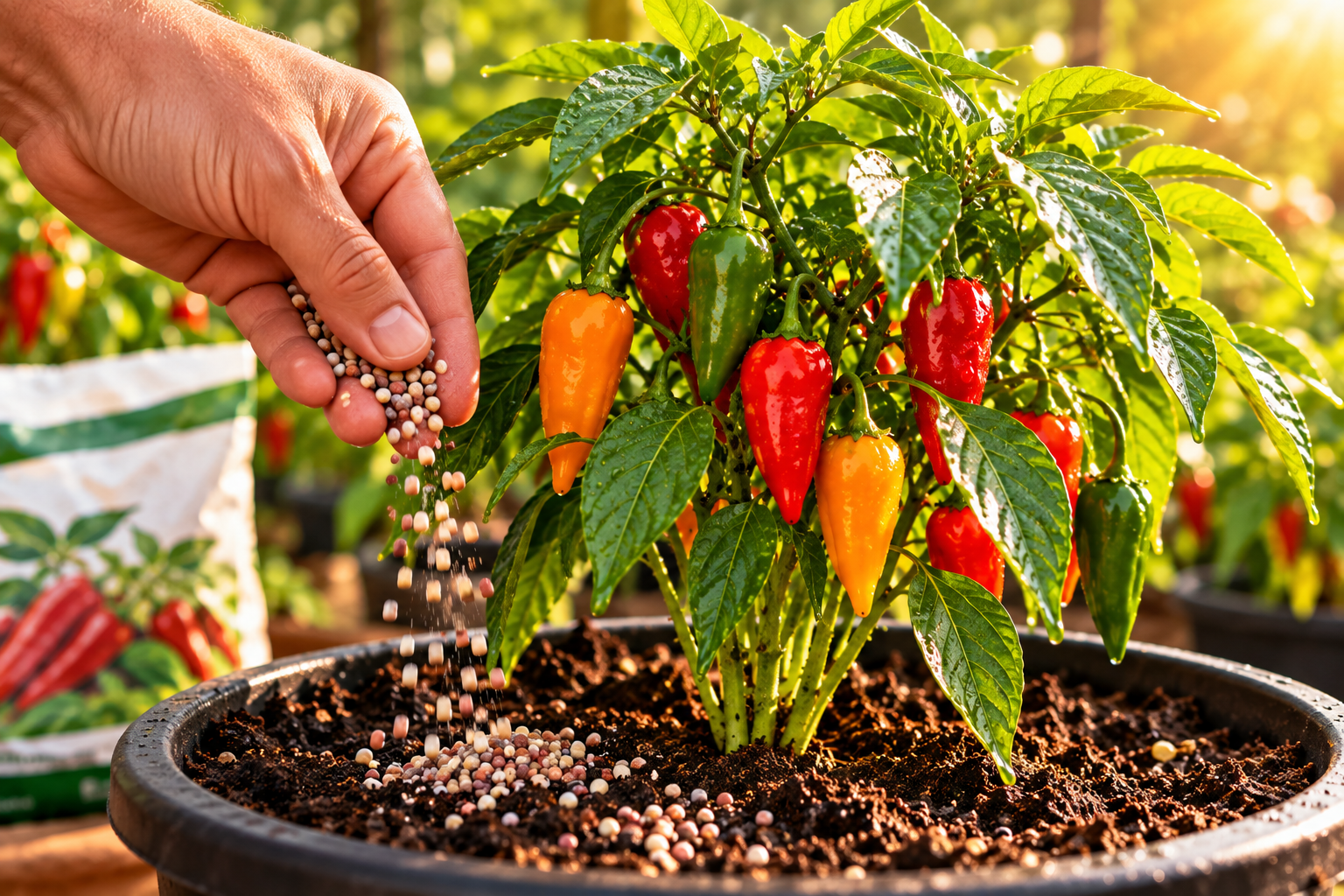
The relative requirements for nitrogen, phosphorus and potassium change throughout the growing cycle. The following N–P₂O₅–K₂O ratios can be used as general guidance for sweet peppers and chili peppers.
| Stage | N–P₂O₅–K₂O | Priority |
|---|---|---|
| 🌱 Establishment Up to approximately 30 days after transplanting |
1 : 2 : 1 | A higher proportion of phosphorus during early root development. |
| 🌿 Vegetative Growth | 1 : 1 : 1 | Balanced nutrition as leaves, stems and overall plant size increase. |
| 🌼 Flowering and Fruit Set | 2 : 1 : 3 | The relative need for potassium increases while that for phosphorus decreases. |
| 🌶️ Fruit Development and Ripening | 2 : 1 : 3 | A high proportion of potassium is maintained during fruit production. |
For example, 2:1:3 indicates the relationship between the three nutrients. It does not mean that 2, 1 and 3 grams should be applied to each plant. The appropriate amount depends on the product's concentration, plant size, growing medium or soil, watering frequency and cultivation system.
Examples to Understand NPK Labels
The numbers on a label indicate the nutrient concentrations in the fertilizer. For example:
| Example | Ratio | Interpretation |
|---|---|---|
| 15-30-15 | 1 : 2 : 1 | Higher proportion of phosphorus. |
| 20-20-20 | 1 : 1 : 1 | Balanced formula. |
| 18-9-27 | 2 : 1 : 3 | Higher proportion of potassium. |
These numbers are examples to help you understand the ratios. You do not need to find these exact formulations: products with similar ratios that are suitable for your growing system can also be used.
🌼 Flowering, Fruit Set and Production
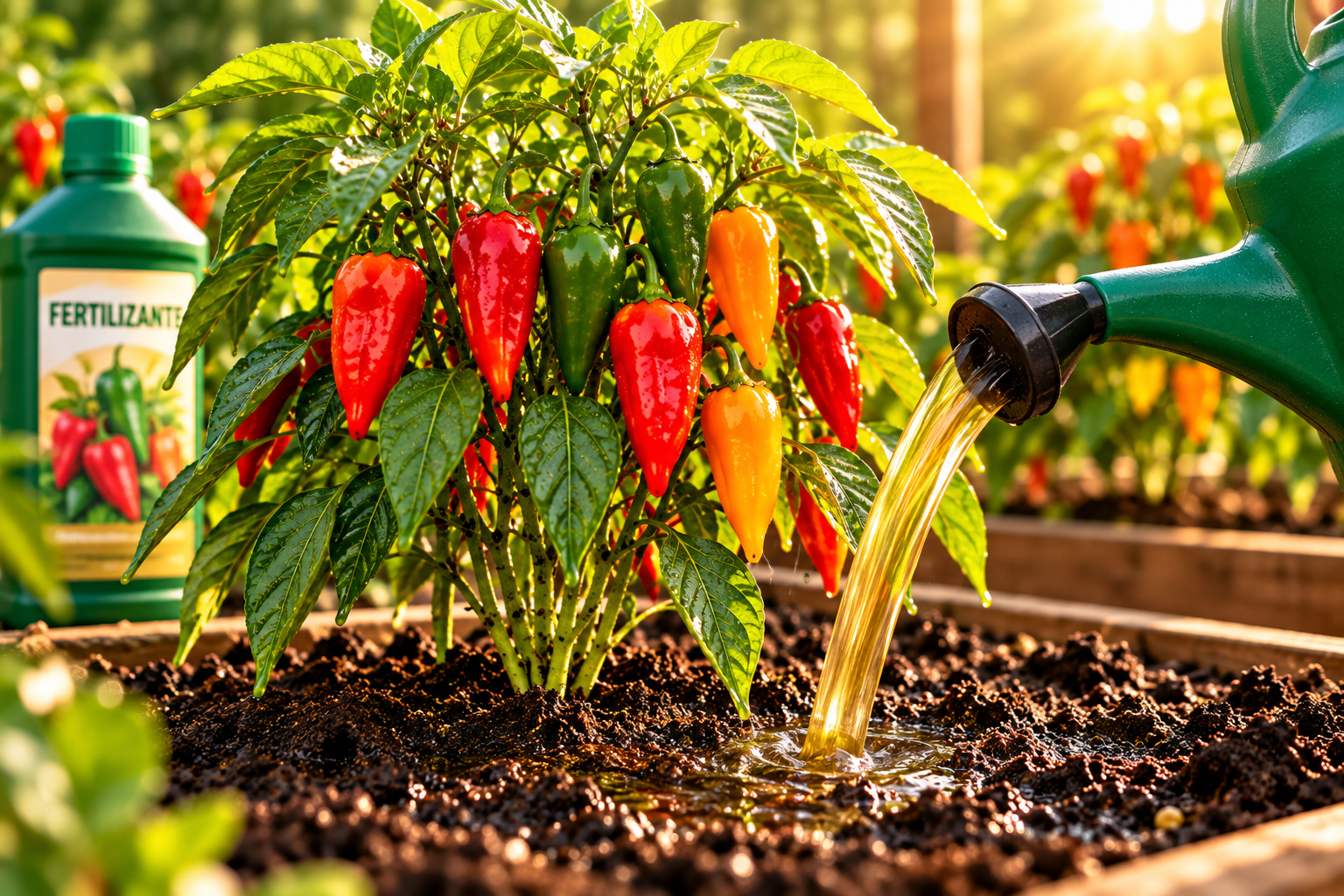
When the reproductive stage begins, nutritional priorities change. The plant still needs nitrogen, but potassium becomes particularly important.
Potassium is involved in numerous plant processes and becomes especially relevant during fruit development. For this reason, a formula used during vegetative growth may not be the best option throughout the entire season.
A plant already carrying many flowers and fruits has different requirements from a young plant that is still developing its structure.
🪴 Fertilizing Chili Peppers Grown in Pots
A pot contains a limited amount of growing medium, and the roots cannot spread into the surrounding soil to find new nutrients. In addition, some soluble nutrients may be lost through water draining out of the pot.
- Use a fertilizer appropriate for the growth stage.
- Follow the manufacturer's recommended dosage.
- Avoid increasing the concentration in an attempt to speed up growth.
- Watch for possible salt buildup or burns on leaves and roots.
- Maintain regular watering and good drainage.
🌱 Fertilizing Chili Peppers Grown in the Ground
In the ground, roots have access to a much larger volume of soil, and initial fertility can vary enormously. Soil rich in organic matter does not require the same fertilization program as poor or very sandy soil.
Mature compost and other organic amendments can improve soil structure and its ability to retain water and nutrients. Whenever possible, a soil analysis is the best way to determine which nutrients are already present and which deficiencies need correcting.

Calcium and Blossom-End Rot
Calcium is essential for the formation and stability of cell walls. During pepper production, a condition known as blossom-end rot may appear: a dark, sunken area at the blossom end of the fruit.
However, finding this problem does not automatically mean there is too little calcium in the fertilizer or soil. Calcium availability and transport to the fruit can be affected by insufficient or irregular watering, salinity and even nutrient imbalances.
Therefore, before adding large amounts of calcium, it is advisable to review watering consistency, root health and the overall fertilization program.
⚠️ More Fertilizer Does Not Mean More Chili Peppers
One of the most common mistakes is assuming that doubling the fertilizer will produce a plant twice as large. Excessive concentrations can increase salinity around the roots, cause damage and make water and nutrient absorption more difficult.
It is also important to avoid fertilization that focuses excessively on vegetative growth throughout the entire season. The aim is to develop a sufficiently strong plant and then support flowering and fruit production appropriately.
- Burnt leaf tips or edges.
- Visible salt buildup on the growing medium.
- Unbalanced growth.
- Damaged roots and a plant that appears dehydrated despite sufficient moisture.
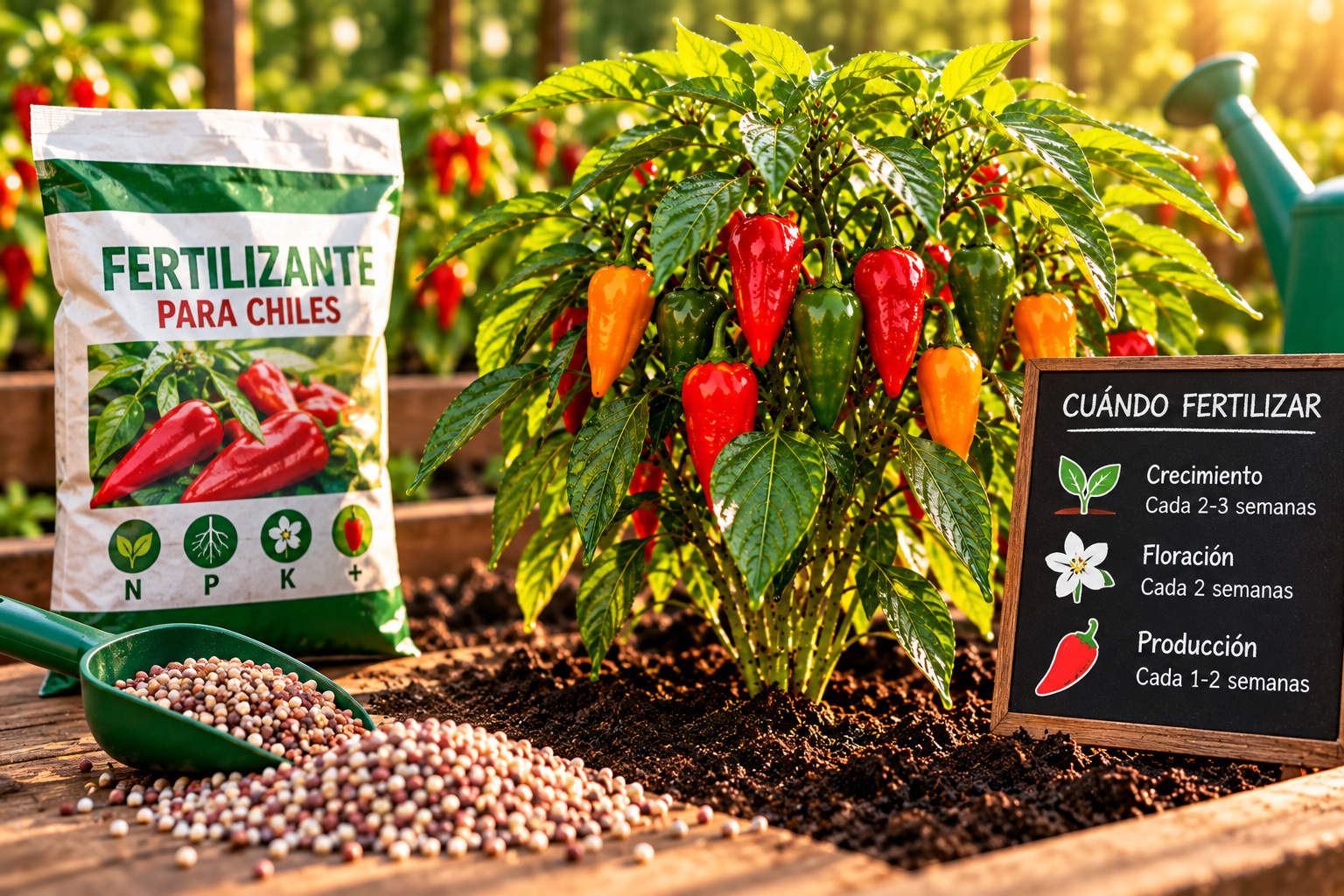
Quick Summary
| 🌱 Newly established plant | Higher proportion of phosphorus — 1:2:1 |
| 🌿 Vegetative growth | Balanced nutrition — 1:1:1 |
| 🌼 Flowering and fruit set | Increase the relative proportion of potassium — 2:1:3 |
| 🌶️ Fruiting and ripening | Maintain a potassium-rich ratio — 2:1:3 |
Always observe your plants. Climate, pot size, variety, growing medium, watering and fruit load can significantly change their requirements. Use these ratios as guidance and adjust the dosage according to the fertilizer you are using.
🌱 Already Have Your Seeds?
To grow your plants, you may also need fertilizers, irrigation systems, tools, greenhouses, pots and other gardening products.
At GLOOBB, you can compare products and find suitable options for your growing needs.