


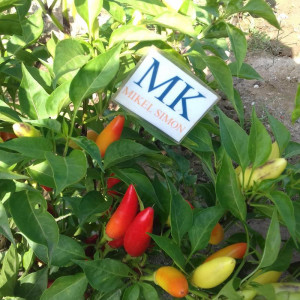



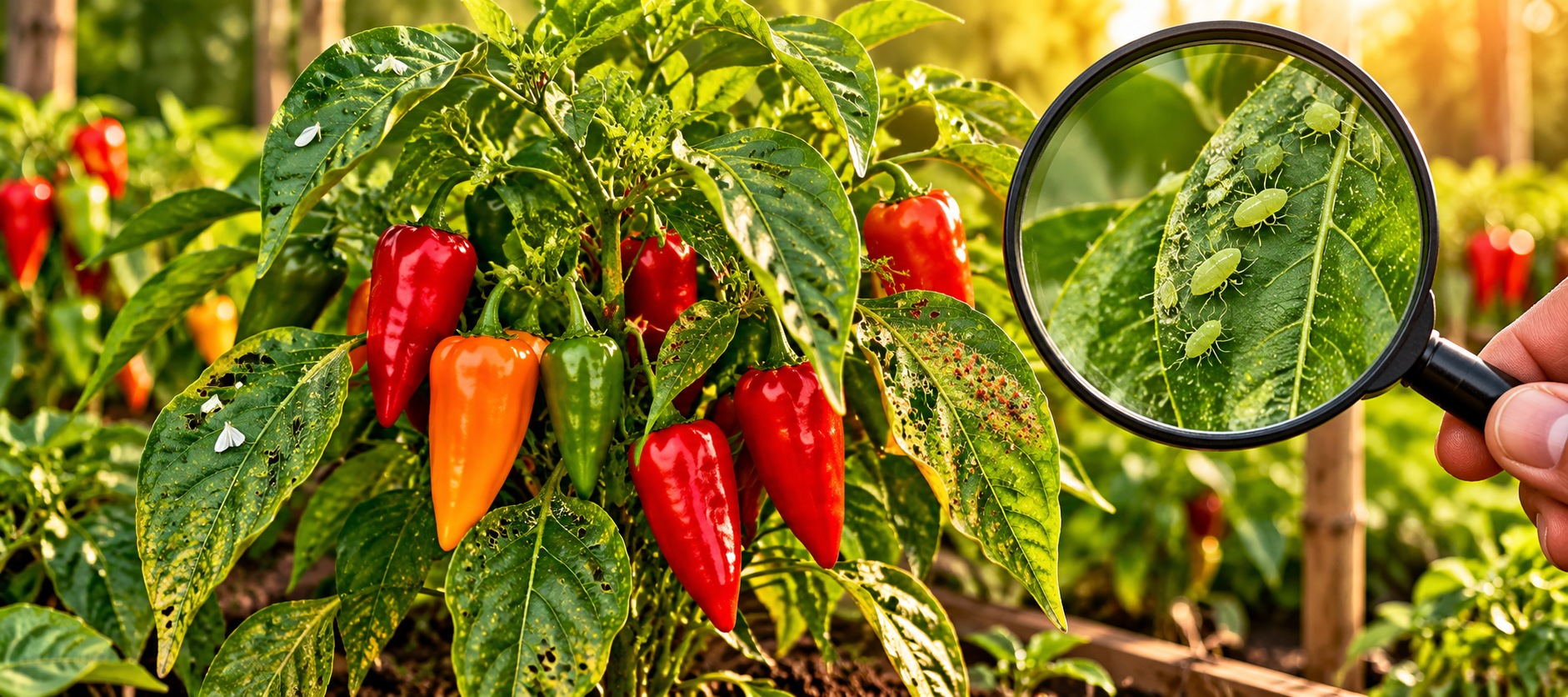
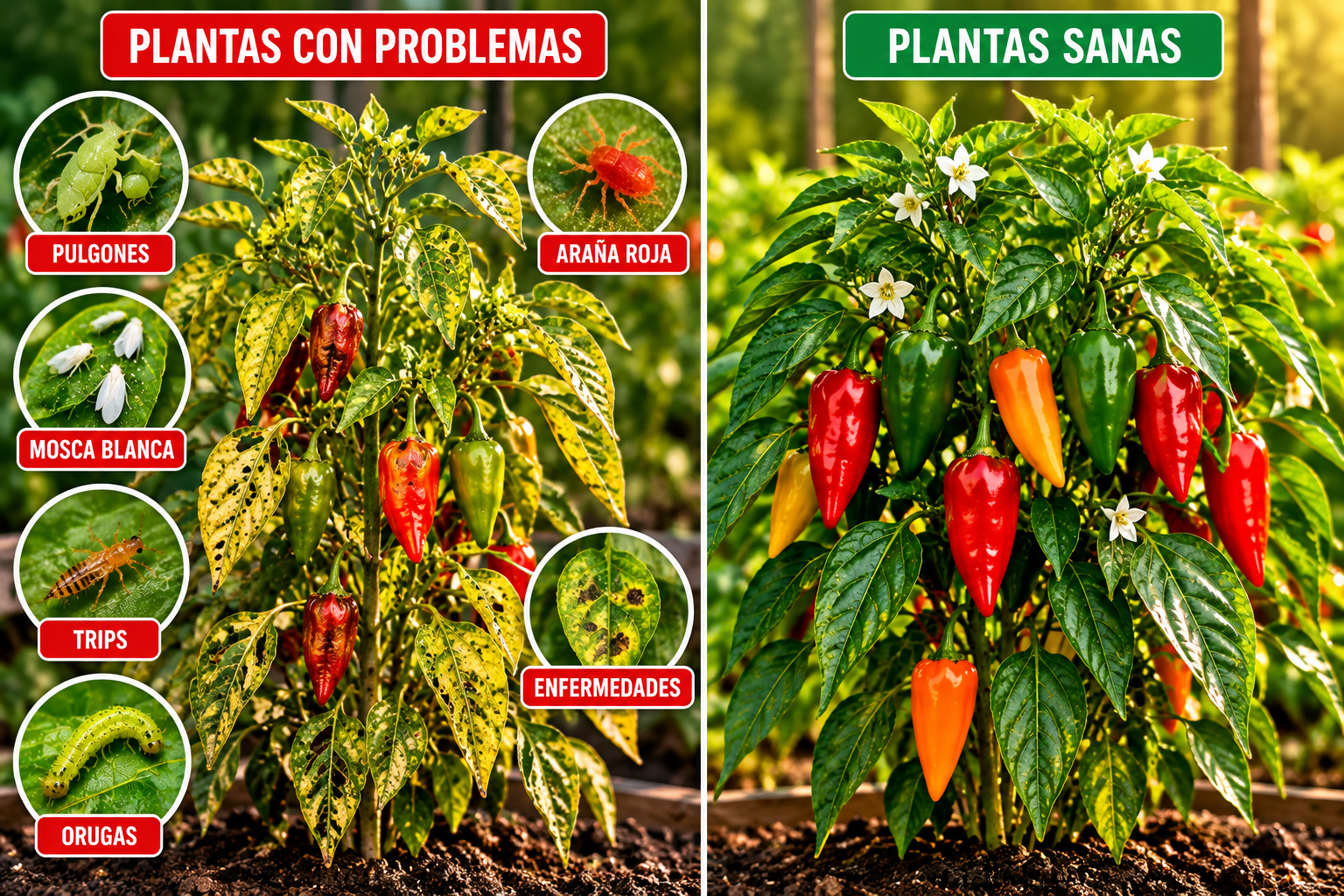
Chili pepper plants can be affected by various pests and problems during cultivation. Aphids, spider mites, whiteflies, thrips and caterpillars are among the most common. Detecting them early is important to prevent the problem from spreading and affecting growth, flowering or fruit production.
🐛 Quick Summary
🔍 Inspect: leaves, new shoots, stems and the undersides of leaves.
🐜 Aphids: often gather on young shoots and tender plant parts.
🕷️ Spider mites: can cause tiny spots and leaf damage.
🪽 Whiteflies: are commonly found on the undersides of leaves.
⚠️ Important: identify the problem before applying any treatment.
🔍 Common Chili Pepper Pests
Regular inspections help detect many problems while they are still localized. Pay particular attention to young shoots, flowers, stems and the undersides of leaves, where some insects can easily go unnoticed.
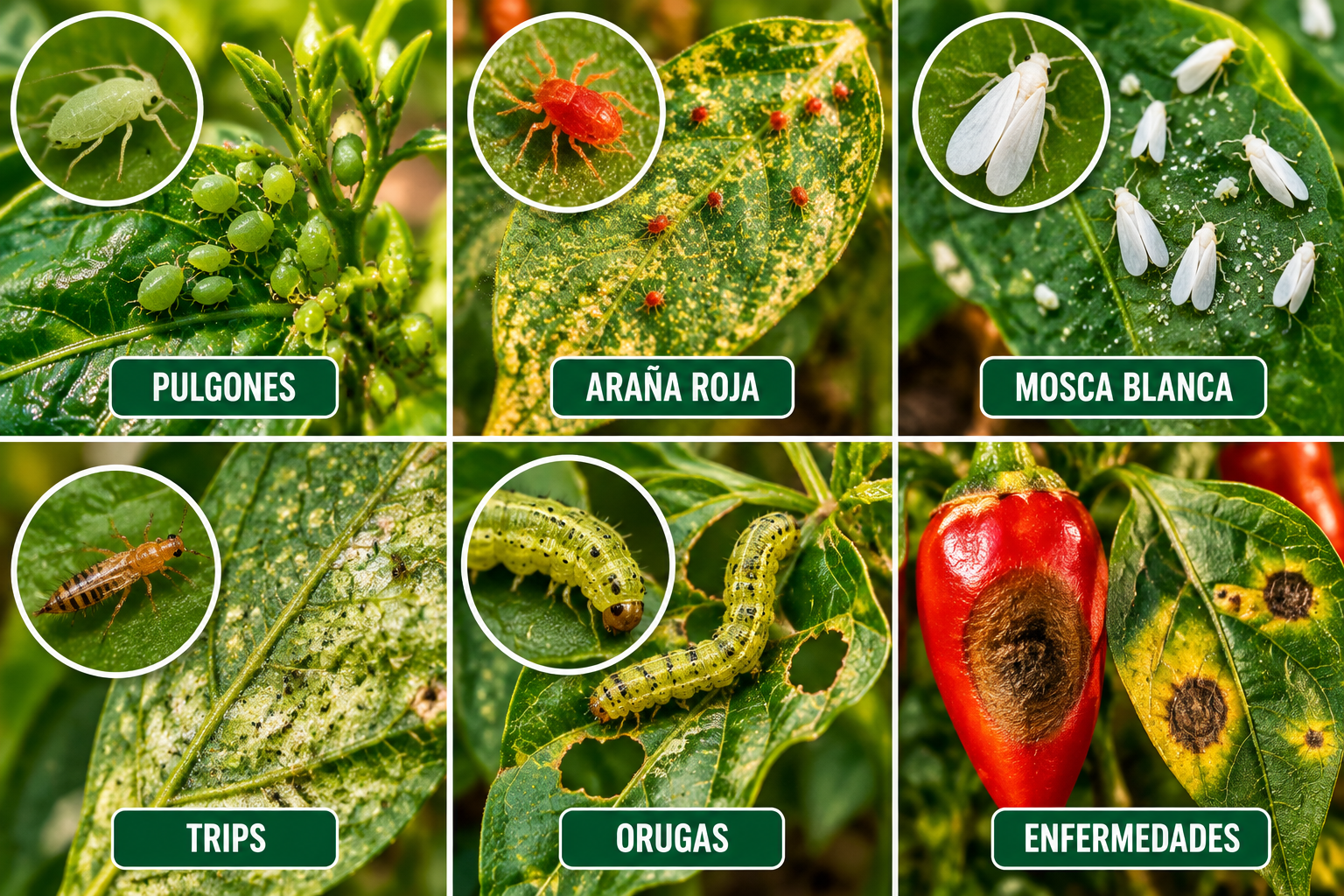
🐜 Aphids
Aphids are small insects that may appear in groups on tender shoots, stems and young leaves. When their numbers increase, they can weaken growth and deform new plant parts.
🕷️ Spider Mites
Spider mites are extremely small and can be difficult to see with the naked eye. One of the first signs may be numerous pale or yellowish dots on the leaves. Severe infestations may also produce fine webbing.
🪽 Whiteflies
Whiteflies usually remain on the undersides of leaves. When an infested plant is disturbed, small white insects may be seen flying away.
🌿 Thrips and Caterpillars
Thrips are small insects that can damage leaves, flowers and fruits. Depending on the severity of the infestation, discolored or silvery areas and deformations may appear.
Caterpillars are generally easier to detect because of the damage they cause. Holes and chewed sections of leaves are signs that justify carefully inspecting the plant.
⚠️ Learn to Observe Your Plants
A healthy plant usually shows vigorous growth and leaves with a uniform appearance. Sudden changes in color, spots, deformations, holes or abnormal leaf drop may indicate a problem.
However, not all symptoms are caused by pests or diseases. Overwatering, lack of water, unsuitable temperatures, nutritional deficiencies or root problems can produce similar symptoms.
For this reason, it is important to examine the entire plant and its growing conditions before deciding which treatment to apply.
📋 Warning Signs to Investigate
| Symptom | What to Check |
|---|---|
| Deformed shoots | Check tender shoots and the undersides of leaves for insects. |
| Tiny spots on leaves | Look for mites, thrips or other possible problems. |
| Holes in leaves | Carefully inspect the plant for caterpillars or other insects. |
| Yellow leaves | Check for pests and review watering, roots, nutrition and environmental conditions. |
| Spots on leaves or fruits | Observe whether the problem spreads and check general growing conditions. |
🛡️ What to Do When You Find a Pest
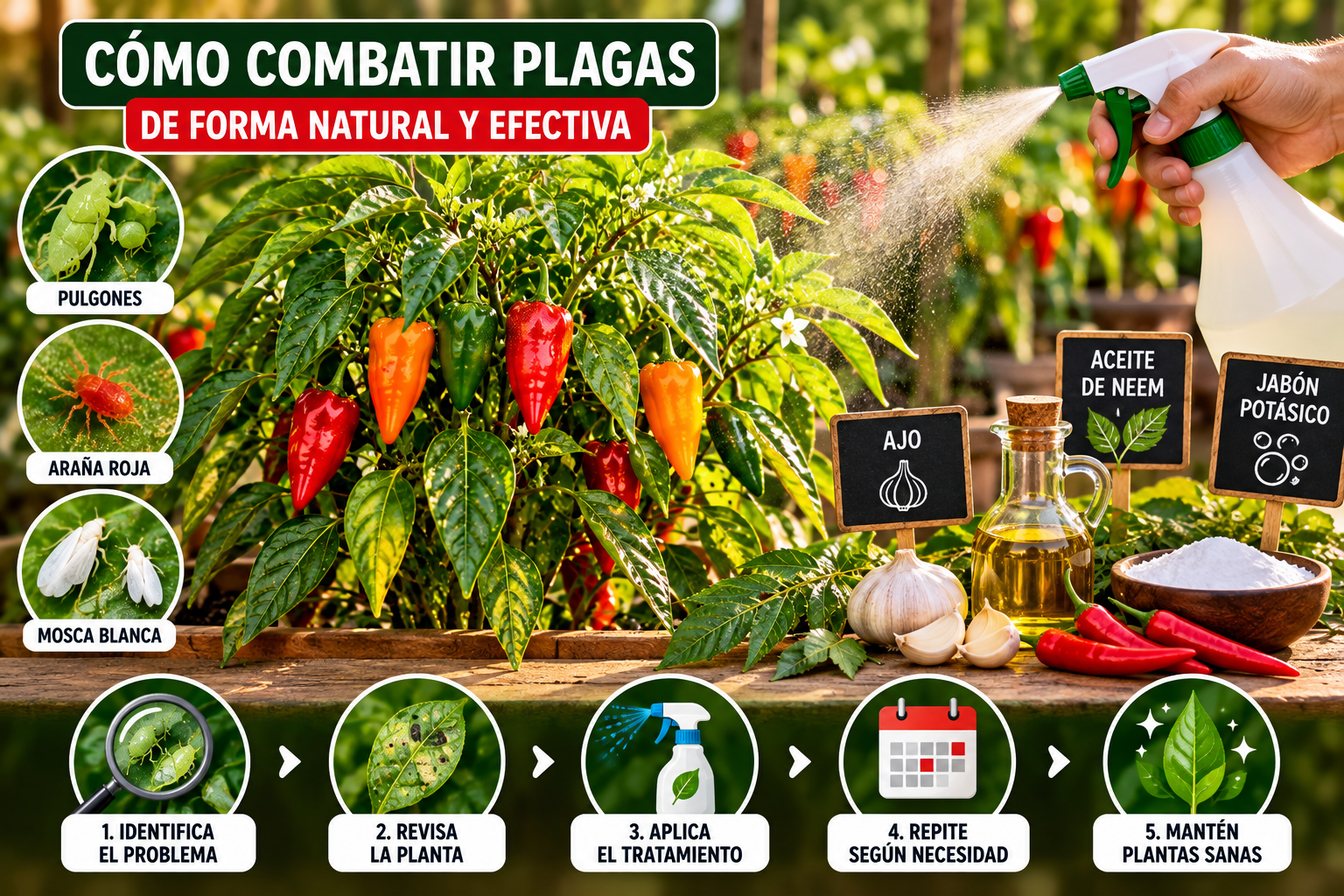
The first step is to identify the problem correctly. Applying products without knowing what is affecting the plant may be unnecessary and may not solve the underlying cause.
If only a few insects are present, in some cases removing them manually or cutting away heavily affected parts may be sufficient. Temporarily separating an infested plant from nearby plants may also be advisable.
When a pest control product is necessary, it must be authorized for the intended use and applied exactly according to its label instructions.
Continue inspecting your plants after treatment. Some pests require ongoing monitoring because they may return.
✅ How to Reduce the Risk of Pests and Plant Problems
🔍 Inspect plants regularly, especially the undersides of leaves.
🌱 Keep plants healthy by providing suitable growing conditions.
💧 Avoid keeping the growing medium constantly waterlogged.
🌬️ Ensure adequate ventilation between plants.
🍂 Remove damaged leaves and plant debris when necessary.
🪴 Inspect new plants before placing them near the rest of your crop.
⚠️ Act early when you detect a problem, before it spreads.
🌿 Methods for Controlling Pests
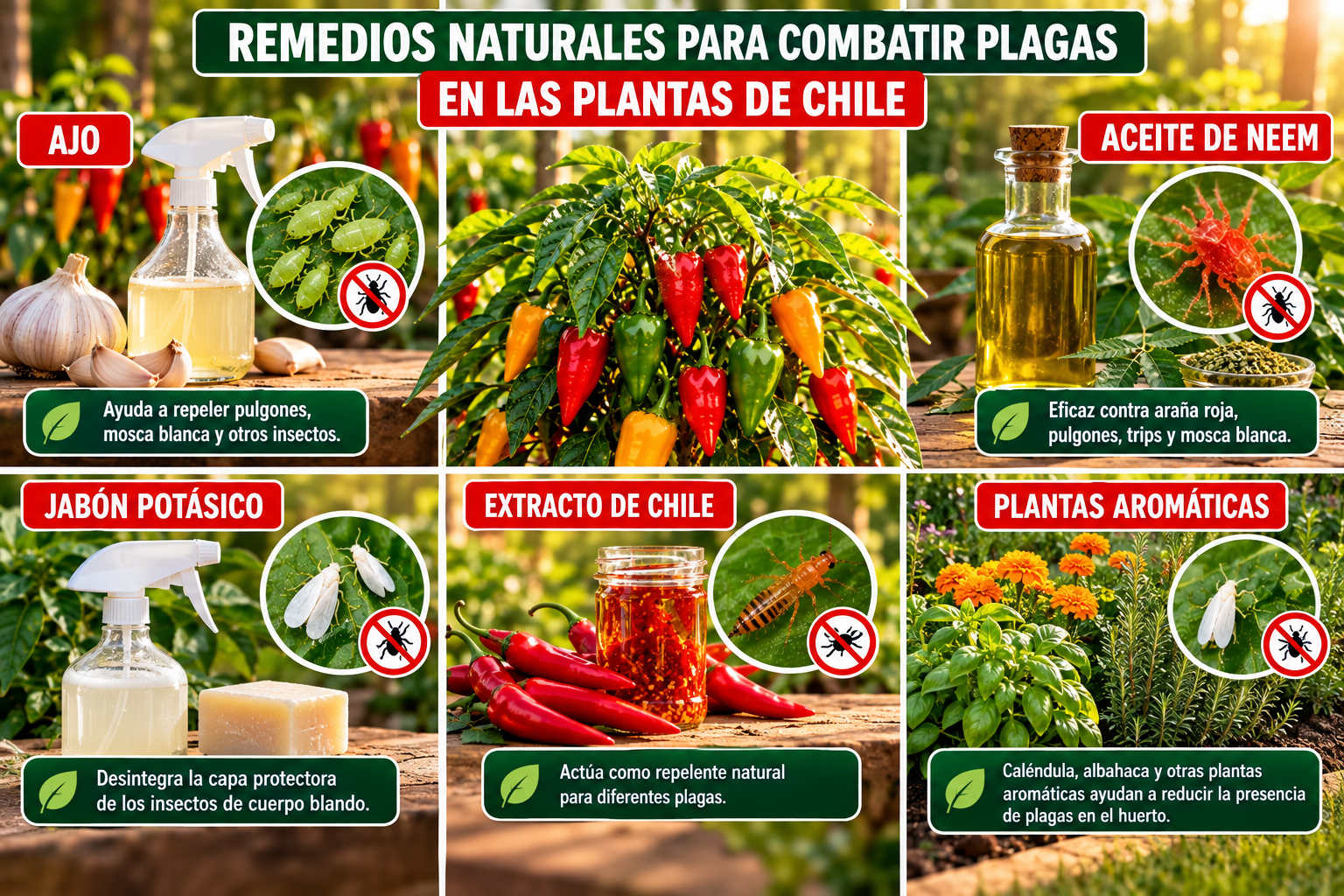
Various products and methods are used in gardening to control certain pests. These may include potassium soap-based preparations, neem oil and other products specifically intended to control insects or mites.
Just because a product is of natural origin does not mean it can be used in any way. Always check that it is suitable for the pest and plant, and follow the manufacturer's instructions, concentrations and application frequency.
Before applying any product to the entire plant, especially if you have never used it before, carefully follow its instructions and avoid applications under conditions that the manufacturer advises against.
❗ Problems That Can Be Mistaken for Pests
| Observed Problem | Other Possible Causes |
|---|---|
| Yellowing leaves | Overwatering, nutritional problems, damaged roots or other conditions. |
| Wilting plant | Too little or too much water, intense heat or root problems. |
| Flower drop | Extreme temperatures, water stress or other growing conditions. |
| Slow growth | Temperature, light, nutrition, container size or roots, as well as possible pests. |
🌶️ Early Detection Is the Best Defense
Regularly inspecting your plants helps identify many pests before they cause significant damage. Examine leaves, shoots, flowers and fruits, and pay attention to any sudden changes.
A plant grown with good lighting, appropriate watering, balanced nutrition and sufficient ventilation will also be in better condition to develop properly.
🛠️ Need to Care for and Protect Your Garden?
If you already have your seeds, you may also need sprayers, tools, irrigation systems, greenhouses and other gardening products. At GLOOBB, you can compare different options to find the products best suited to your growing needs.