




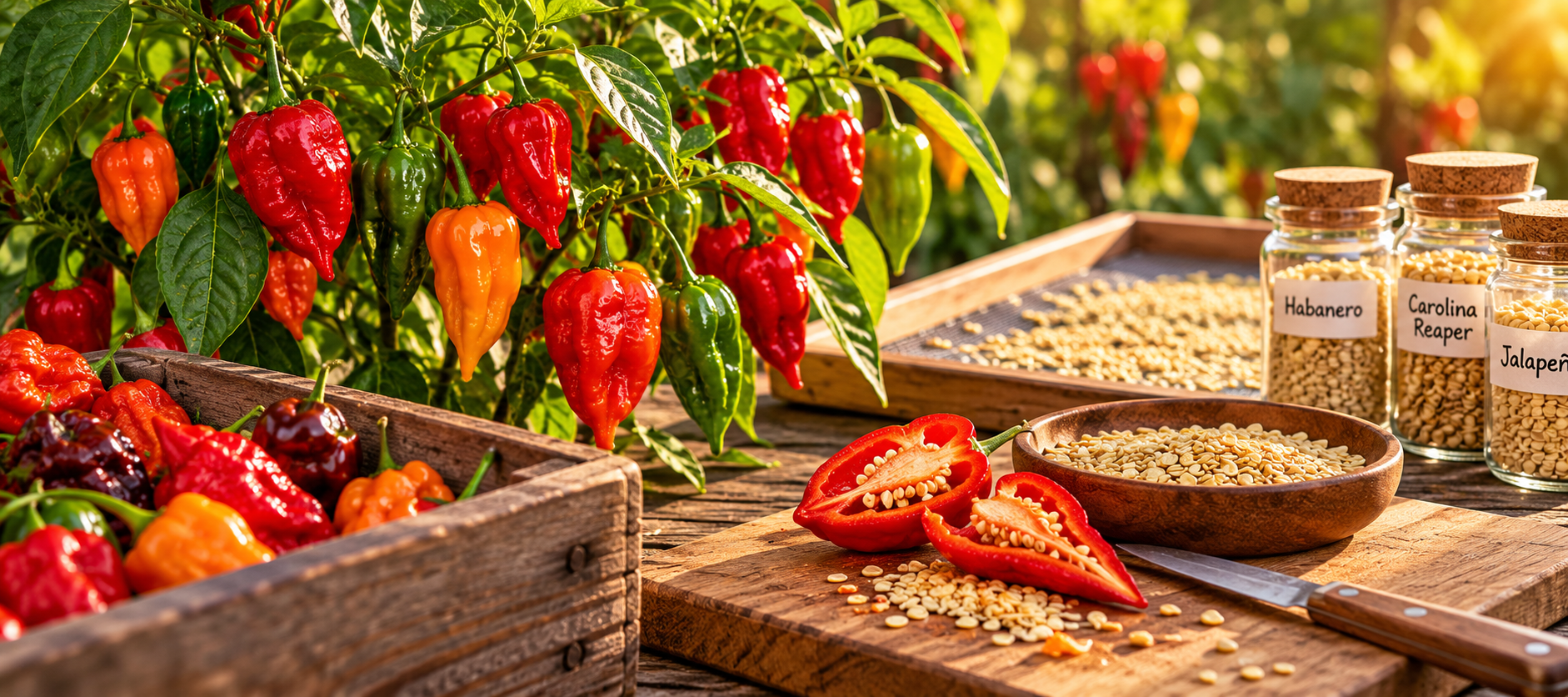
Harvesting chili peppers at the right time allows you to enjoy fully developed fruits and collect seeds for future planting. If you want to save seeds, choose healthy, fully ripe fruits, extract the seeds carefully and make sure they are completely dry before storing them.
🌾 Quick Summary
🌶️ Fruits: choose healthy, fully ripe chili peppers.
🌱 Seeds: collect only well-developed seeds.
💨 Drying: remove moisture completely before storage.
🏷️ Labeling: always record the variety and harvest year.
📦 Storage: keep seeds in a cool, dry and dark place.
🌶️ When Should You Harvest Chili Peppers?
The right harvesting time depends on the variety and how you intend to use the fruit. Some chili peppers can be eaten green, while others develop their final color, aroma and characteristics when they reach full maturity.
If your goal is to collect seeds, it is best to allow the fruit to reach full maturity. Choose healthy fruits from vigorous plants and avoid using damaged fruits or those showing obvious signs of disease.
The ripe color depends on the variety. It may be red, orange, yellow, brown or another color, so there is no single ripeness color that applies to all chili peppers.
🌱 Choosing Fruits for Seed Saving
If you want to save your own seeds, select fruits that best represent the characteristics you wish to preserve. Choose healthy plants and well-formed fruits that have reached full maturity.
Keep in mind that chili pepper plants can cross-pollinate with other compatible varieties growing nearby. If you need to maintain a variety as true to type as possible, pollination must be controlled or isolation methods used.

✂️ How to Extract Seeds from Chili Peppers
Carefully open the ripe fruit and separate the seeds from the inside. You can use a small spoon or remove them carefully by hand.
Select seeds that appear normal and well-developed, and remove any significant pieces of pulp that may remain attached.
Wear gloves when handling hot and especially superhot varieties. Capsaicin can remain on your hands and cause severe irritation if you subsequently touch your eyes, nose or other sensitive areas.
Wash your hands and utensils thoroughly after handling the fruits.
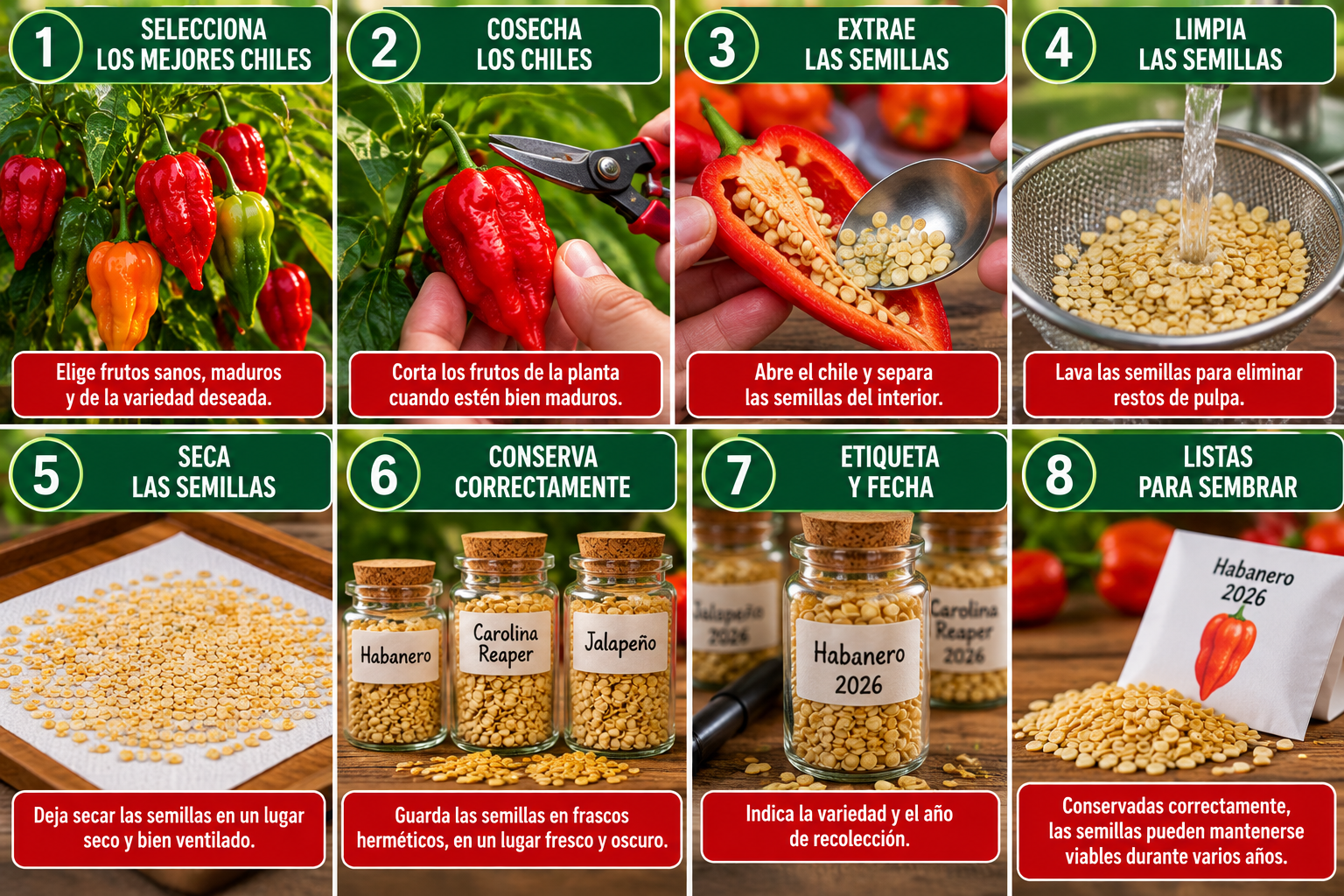
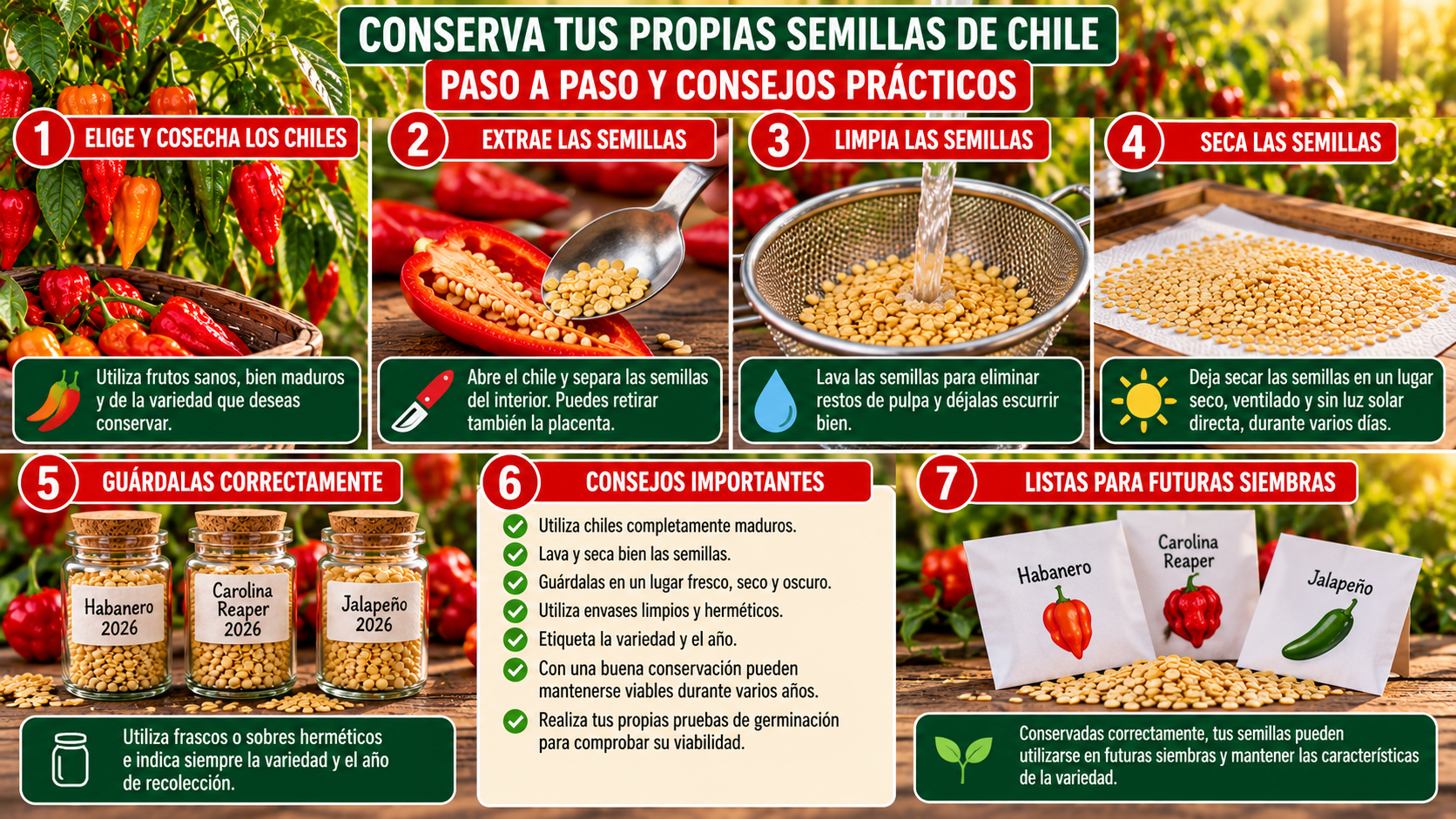
📋 From Fruit to Stored Seed
| Step | What to Do |
|---|---|
| 1. Selection | Choose a healthy, fully ripe fruit. |
| 2. Extraction | Open the chili pepper and carefully separate the seeds. |
| 3. Cleaning | Remove pieces of pulp and plant material. |
| 4. Drying | Spread out the seeds and allow them to dry completely. |
| 5. Labeling | Record the variety and harvest year. |
| 6. Storage | Store dry seeds away from moisture, heat and light. |
💨 How to Dry Chili Pepper Seeds Properly
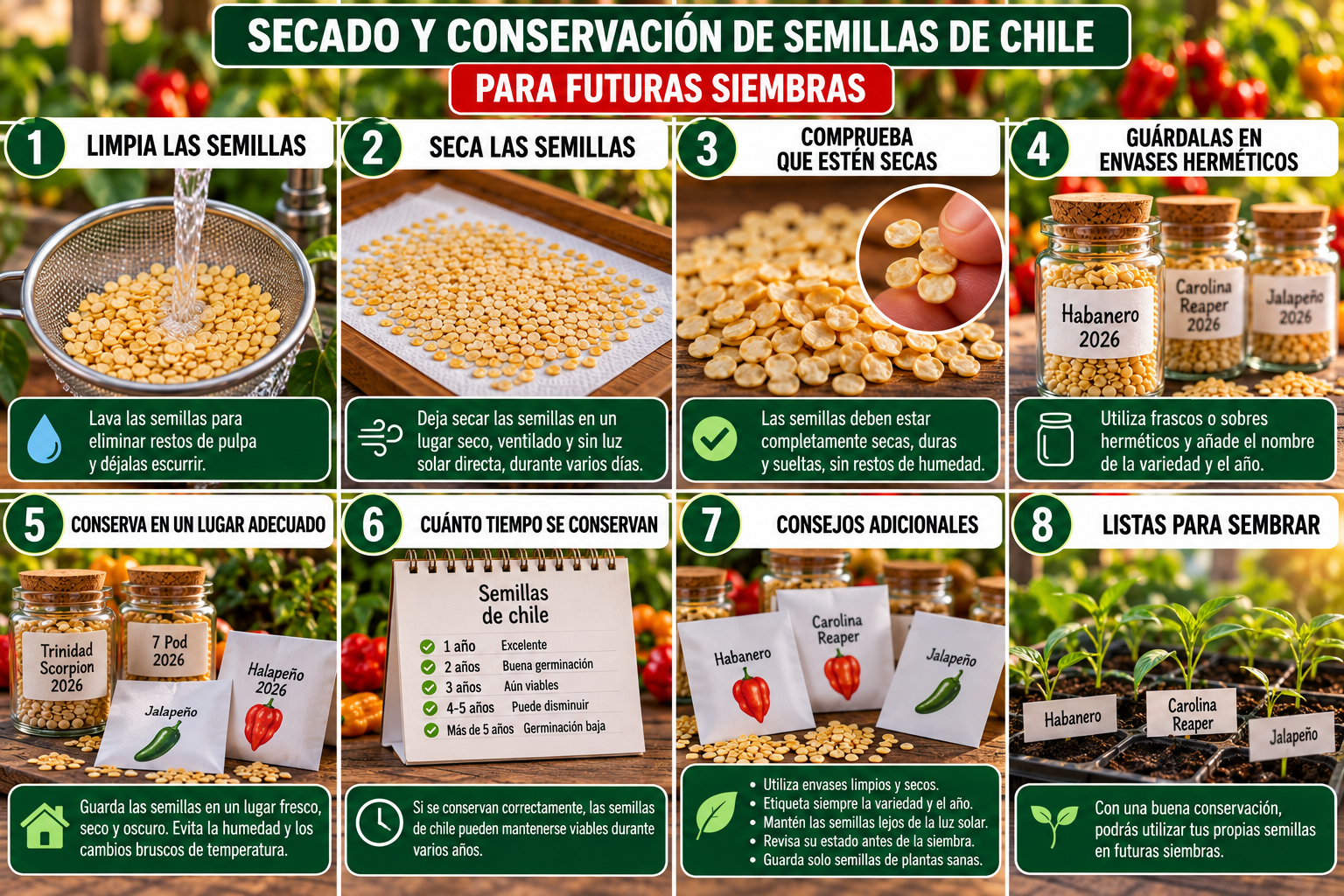
Drying is one of the most important stages. Before storage, the seeds must have lost all surface moisture and be thoroughly dry.
Spread them in a thin layer on a clean, dry surface. Leave them in a well-ventilated place, protected from moisture and intense sunlight.
Avoid storing seeds too early. If moisture remains inside the container, problems may develop during storage.
The time required depends on ambient humidity, ventilation and the conditions of the drying area.
🏷️ How to Store Chili Pepper Seeds
Once completely dry, store the seeds in clean, dry envelopes or containers. Label each batch to avoid confusing varieties later.
At a minimum, it is useful to record:
🌶️ Variety name.
📅 Harvest year.
📝 Additional information you want to keep about the plant or growing conditions.
Keep seeds in a cool, dry and dark place, particularly avoiding moisture and extreme temperature changes.
⏳ How Long Can Chili Pepper Seeds Be Stored?
Seed viability gradually decreases over time and depends greatly on storage conditions. Dry, cool and stable storage conditions help preserve germination capacity for longer.
It is not possible to determine whether every seed in a batch is still viable simply by looking at it. After several years, you can perform a small germination test before sowing the entire batch.
🌱 Preparing Seeds for Future Planting
Saving your own seeds provides planting material for future seasons, but it is important to keep each variety properly identified.
Before sowing seeds that have been stored for a long time, testing a few seeds allows you to check whether they still germinate satisfactorily.
If you save several varieties, always keep them separate and clearly labeled from extraction until the next planting.
✅ Tips for Saving Your Seeds
🌶️ Use healthy, fully ripe fruits.
🧤 Wear gloves when handling extremely hot peppers.
🌱 Select well-developed seeds.
💨 Allow seeds to dry completely before storing them.
🏷️ Always label each variety and harvest year.
🌡️ Store seeds in cool, dry and stable conditions.
🧪 Perform a germination test if seeds have been stored for a long time.
❗ Important When Growing Several Varieties
Chili peppers can cross-pollinate with other compatible varieties. Although the harvested fruit retains the characteristics of the plant that produced it, plants grown later from its seeds may show different characteristics if cross-pollination occurred.
If you want to produce seeds with greater varietal purity, you must prevent cross-pollination through isolation or controlled pollination techniques.
🌶️ From Harvest to the Next Planting
Selecting good fruits, carefully extracting the seeds, drying them completely and storing them properly are the essential steps for preparing seeds for future planting.
Good organization is also important: identify each variety and keep harvest information so you know which seeds you have when the next growing season arrives.
🛠️ Preparing for the Next Growing Season?
To prepare for new planting, you may need seed trays, greenhouses, tools, irrigation systems and other gardening products. At GLOOBB, you can compare different options and find products suited to your growing needs.