






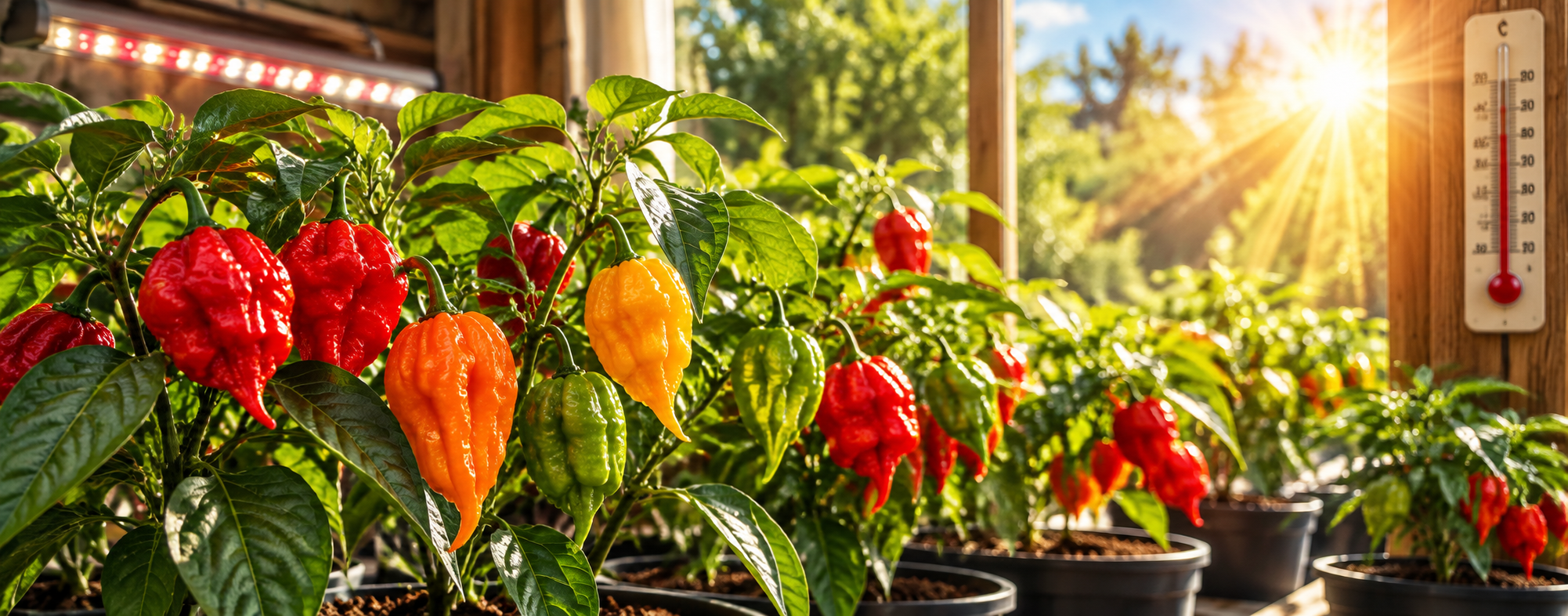
Temperature and light are two of the most important factors for growing strong, productive chili pepper plants. From germination to fruit development, the plant's requirements change. Maintaining warm conditions and providing sufficient light helps produce compact, vigorous plants ready for a good harvest.
🌱 Quick Summary
🌡️ Germination: 25–28 °C is a very favorable range for many varieties
☀️ Light: plenty of light after germination
🌱 Seedlings: prevent excessively tall, weak growth
🌶️ Mature plants: need plenty of light for healthy development
❄️ Cold: can significantly slow growth
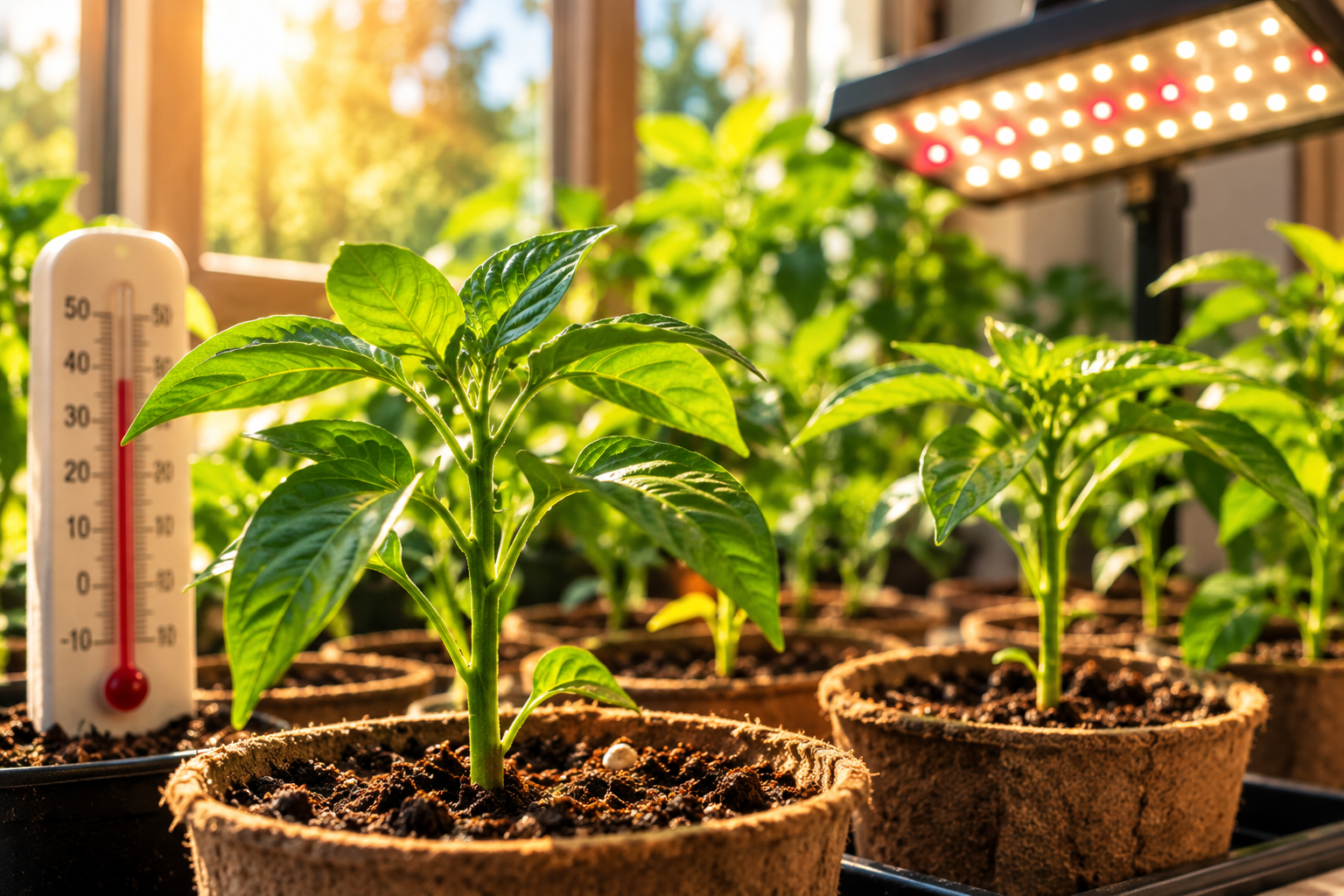
🌡️ Temperature for Germinating Chili Pepper Seeds
During germination, maintaining the right temperature is particularly important. Many chili pepper seeds germinate well in warm conditions, while temperatures that are too low can make the process considerably slower.
For many varieties, an approximate range of 25–28 °C is very favorable. Some superhot varieties, especially certain Capsicum chinense peppers, may require more patience to germinate.
If the room is cold, a seedling heat mat can help maintain a more stable temperature. Excessive heat should also be avoided, particularly when the seed tray is completely enclosed.
| Temperature | Expected Result |
|---|---|
| Below 18 °C | Generally slow or irregular germination |
| 20–24 °C | Suitable for many varieties |
| 25–28 °C | Very favorable for many chili pepper varieties |
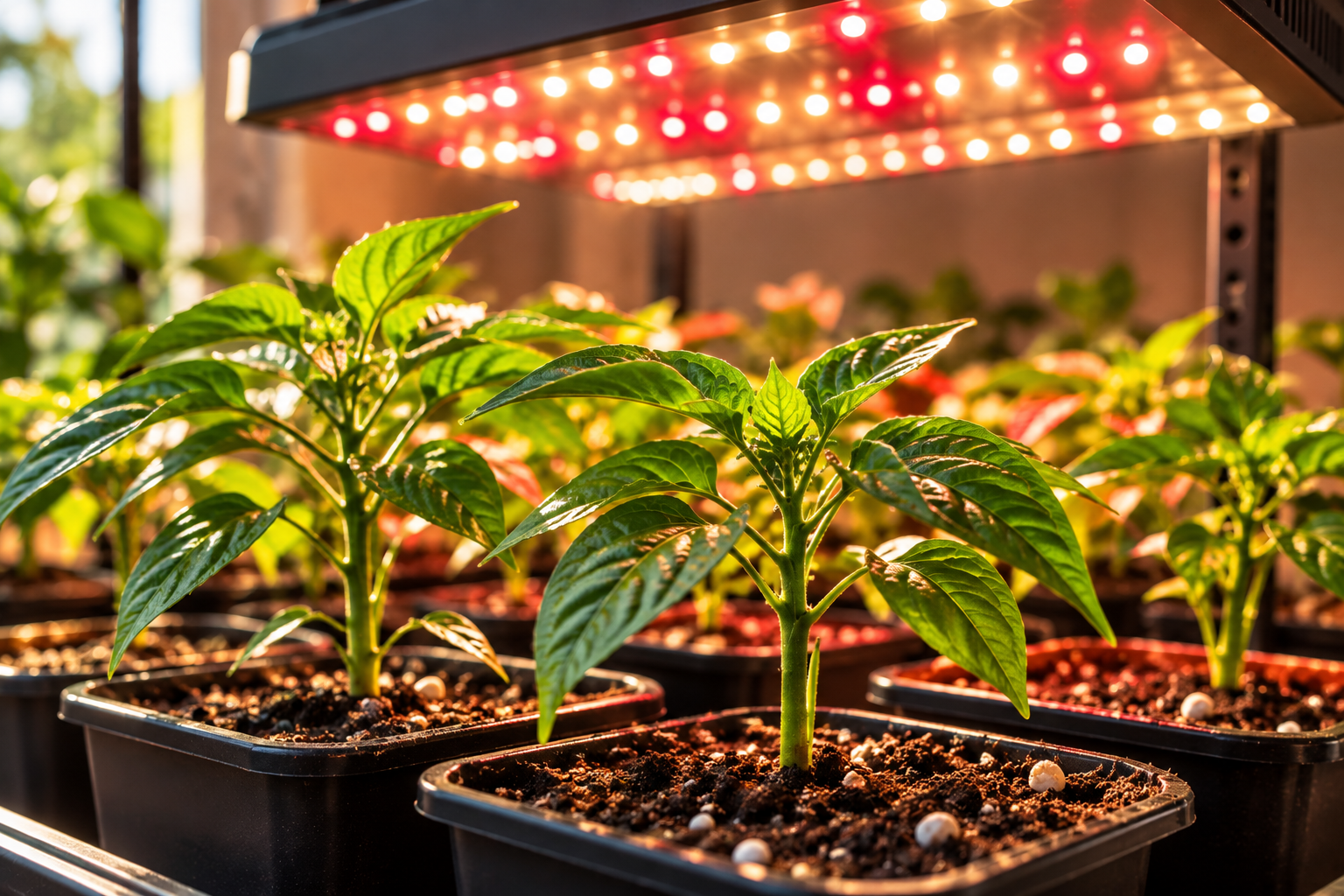
☀️ How Much Light Do Chili Pepper Plants Need?
Once the first seedlings appear, lighting becomes essential. Young plants grow towards the light, and when they receive too little, they can develop excessively long, thin and weak stems.
Place seedlings in a very bright location. If natural light is insufficient, especially during months with shorter days, suitable artificial grow lights can be used.
As the plants grow, good lighting encourages more compact and vigorous development.
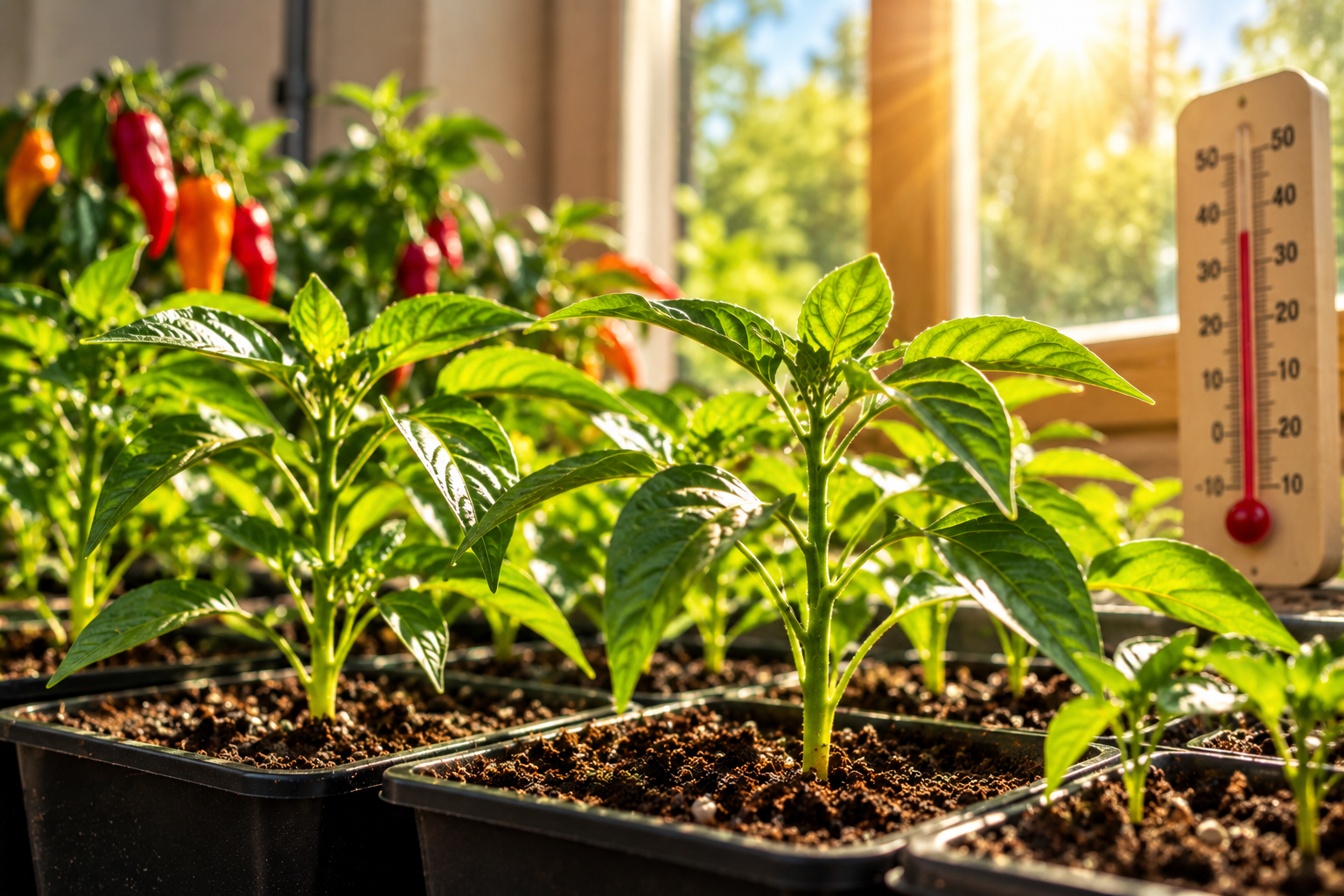
🌡️ Temperature During Growth
After germination, chili peppers continue to prefer relatively warm conditions. Low temperatures can reduce their growth rate and delay plant development.
Superhot varieties generally benefit from a long, warm growing season. For this reason, starting plants sufficiently early can be important in areas where the warm season is short.
🌙 Nighttime Temperature
It is normal for nighttime temperatures to be lower than daytime temperatures. However, plants should be protected from significant temperature drops, especially while they are still small.
Avoid placing young seedlings near cold drafts or in locations where sudden temperature changes occur.
☀️ Moving Plants into Direct Sunlight
A plant grown indoors or under artificial lighting should not be suddenly exposed to many hours of intense sunlight. Its leaves may be damaged if the change happens too quickly.
It is best to gradually acclimatize plants to outdoor conditions, slowly increasing their exposure over several days.
❗ Temperature and Light Problems
| Problem | Possible Cause |
|---|---|
| Seeds take a long time to germinate | Temperature is too low |
| Very tall and thin seedlings | Insufficient lighting |
| Very slow growth | Low temperature, insufficient light or other growing conditions |
| Damaged leaves after moving plants outdoors | Exposure to intense sunlight too quickly |
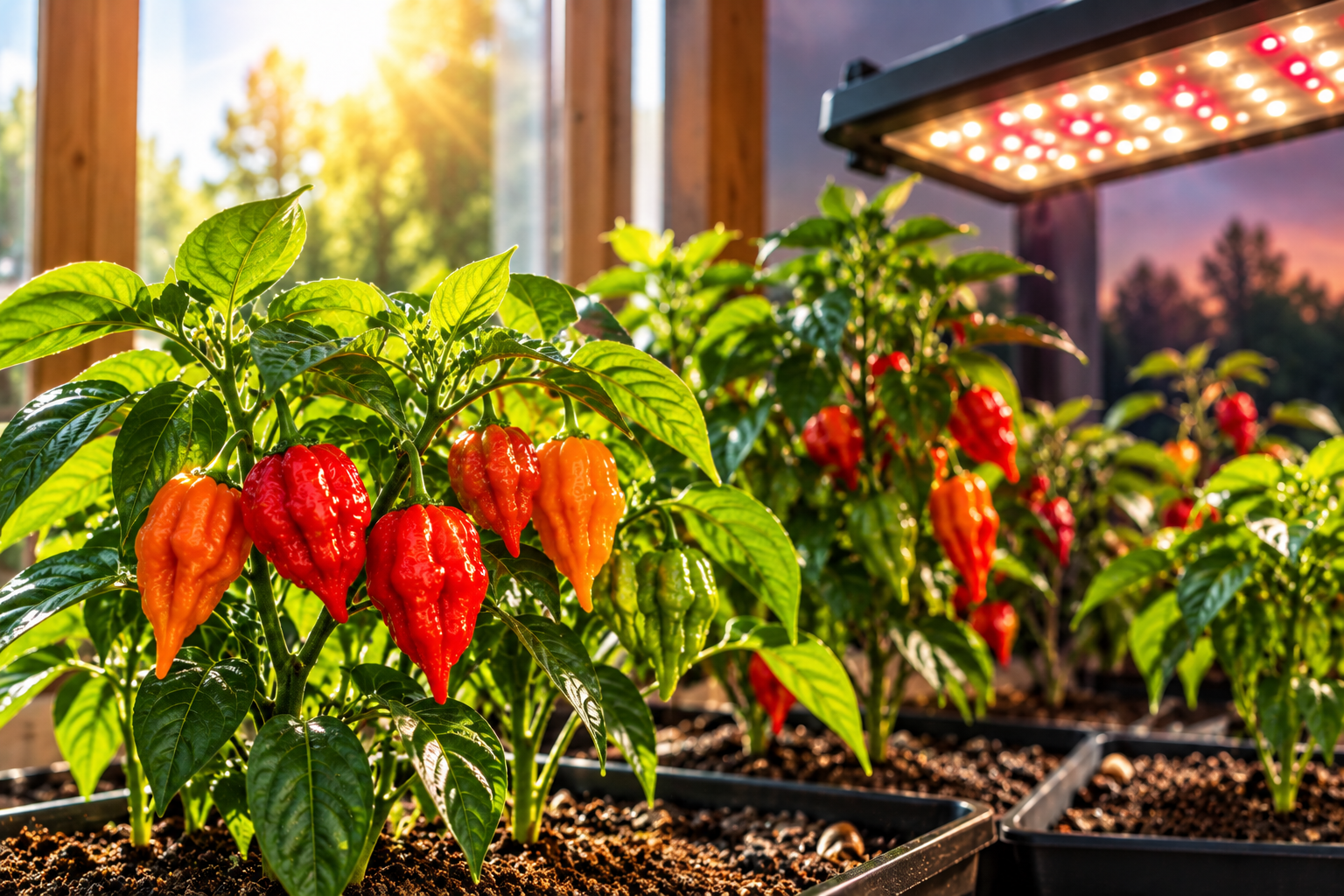
🌞 Natural Light or Grow Lights
Whenever possible, a location with plenty of natural light is a good option for growing chili peppers. However, at certain times of the year, natural light may not be sufficient, particularly for young plants grown indoors.
Grow lights can supplement available light and help maintain healthy growth. They should be used according to the manufacturer's instructions regarding distance, power and operating time.
✅ Tips for Managing Temperature and Light
🌡️ Maintain warm, relatively stable temperatures during germination.
🌱 Once seeds germinate, provide good lighting from the beginning.
☀️ Gradually acclimatize young plants to direct sunlight.
❄️ Protect plants from excessively low temperatures.
💡 If using artificial lighting, follow the manufacturer's recommendations.
🌶️ Remember that each variety may respond slightly differently.
🌶️ Temperature + Light = Stronger Chili Pepper Plants
There is no single perfect set of conditions for every variety and every growing stage. The important thing is to provide sufficient warmth during germination, good lighting when seedlings appear and avoid extreme changes during growth.
Observing your plants is essential: their growth, color and appearance can help you identify whether they need more light or whether environmental conditions require adjustment.
🛠️ Need to Prepare Your Growing Area?
To better control growing conditions, you may need seed trays, thermometers, irrigation systems, tools or other gardening products. At GLOOBB, you can compare different options and find suitable products for your plants.